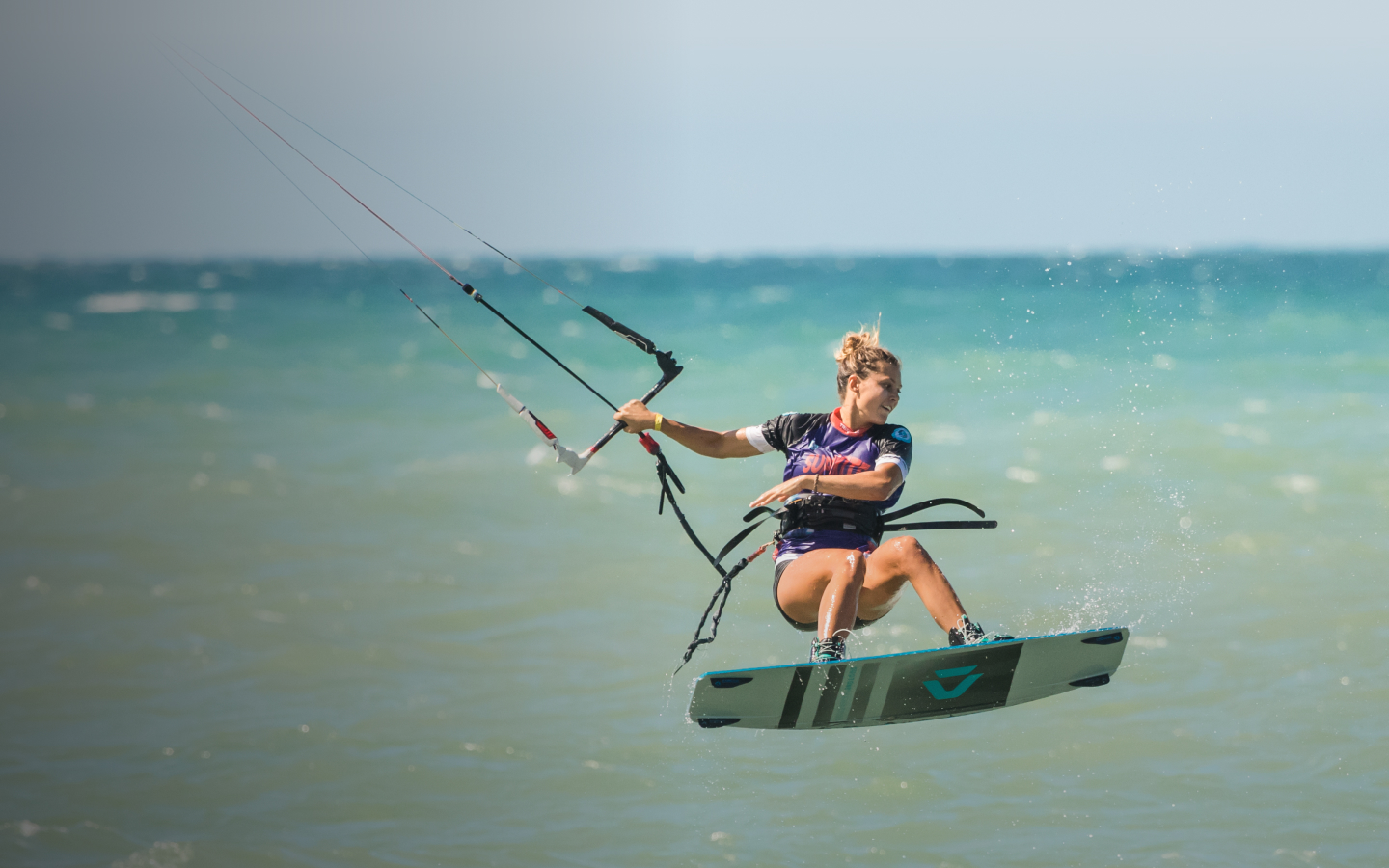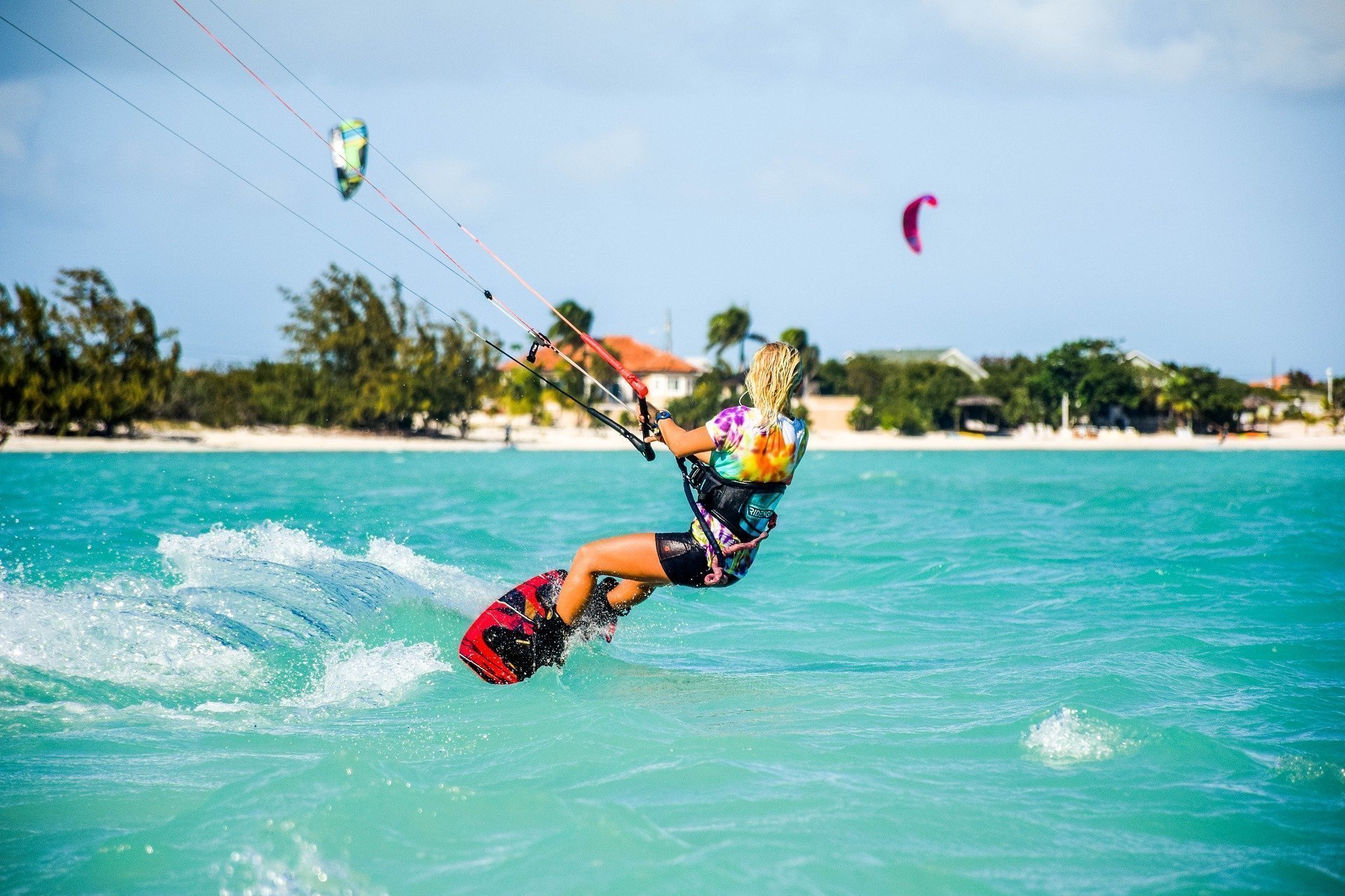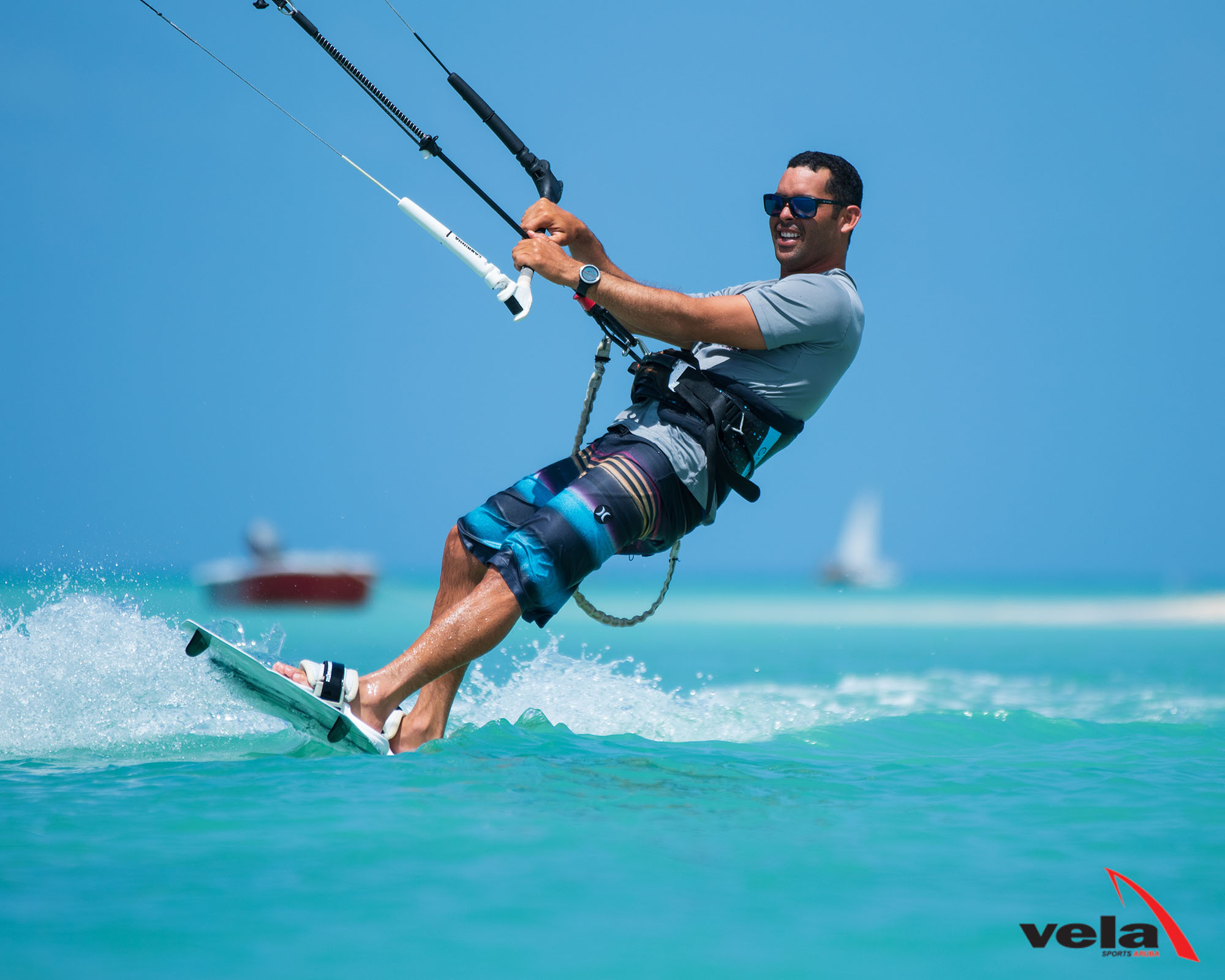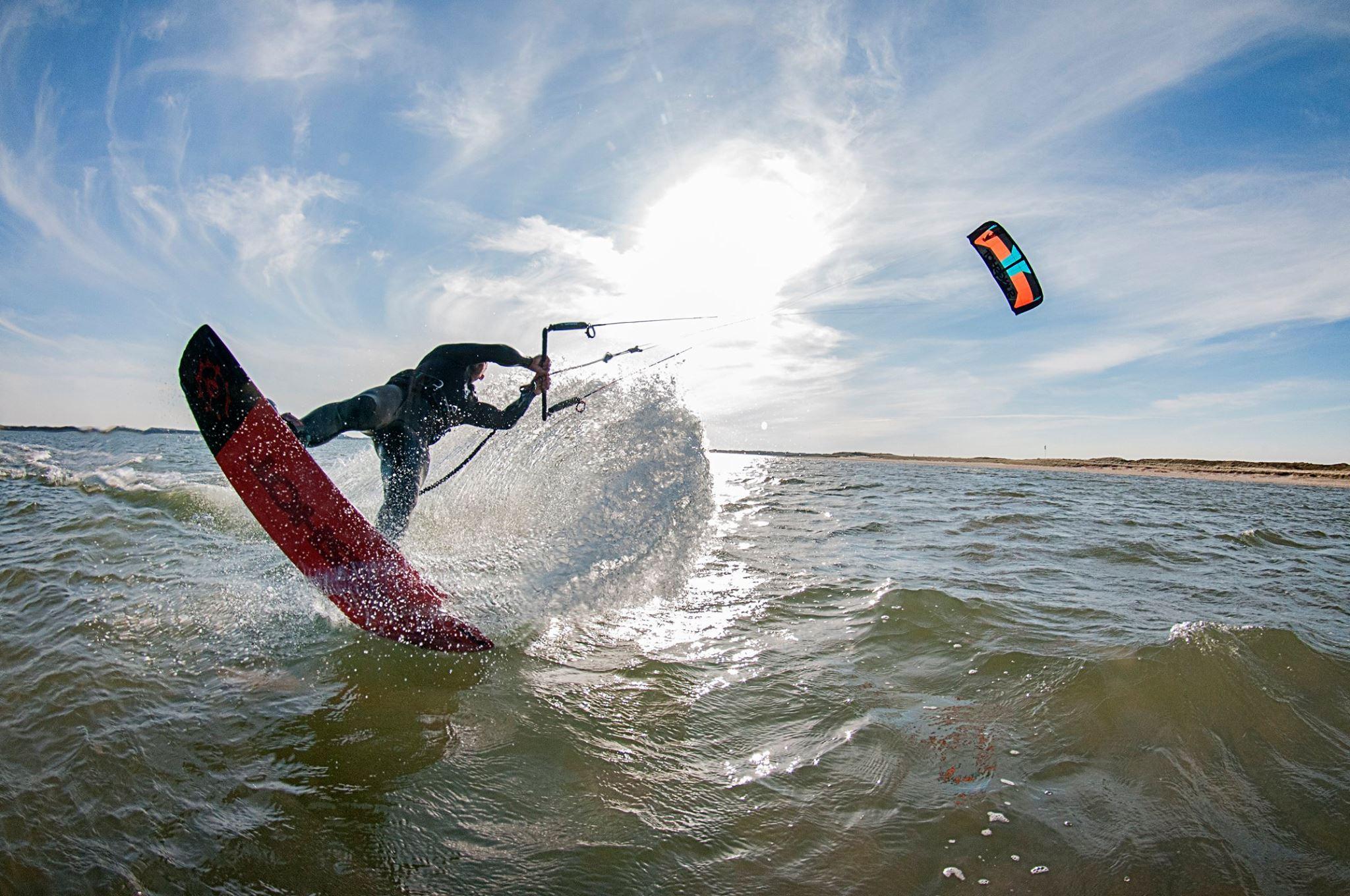
What is Kitesurfing: “Has the thrilling vision of a kitesurfer, slicing through azure waves and flying high above the ocean under a colorful kite ever ignited an adventurous spark in you? Kitesurfing is no longer a sport reserved solely for hardcore adrenaline junkies. Everyday people are harnessing the wind’s power to experience this exhilarating combination of paragliding, surfing, and wakeboarding. Dive into our definitive guide “Kitesurfing 101: What You Need to Know to Get Started,” where we unravel the essence of this fascinating sport and provide an easy roadmap to your first ride on the waves.”
Kite surfing, also known as kiteboarding, is a surface water sport that involves riding on a board while being propelled by the power of a large kite. The rider controls the kite with a bar that is attached to lines, allowing them to manipulate their speed and direction across the water. It combines elements of surfing, wakeboarding, windsurfing, and paragliding, offering an exhilarating experience for enthusiasts around the world.
Understanding Kitesurfing

Kitesurfing is an exhilarating sport that can be enjoyed by people of all ages and abilities. It combines the thrill of surfing with the power of a kite, which propels you across the water or even up into the air. Unlike surfing, which requires waves to ride, kitesurfing only requires wind, making it possible to enjoy this sport almost anywhere in the world.
Imagine feeling the wind whip around you as you stand on a board, harnessing the power of a 14-meter kite as it pulls you at top speeds across flat waters. The adrenaline rush is incomparable, and with each session out on the water, your skills improve, and you feel a deep connection to nature.
To get started with kitesurfing, it’s essential to understand how wind works and how it powers your kite. The kite acts like a sailboat sail as it catches the wind and propels you across the water. As a rider, you control the kite’s direction and speed using a control bar connected to harnesses around your waist.
Some people may worry about getting too much airtime or being pulled off course by strong winds, but with proper instruction and safety gear such as a helmet and impact vest, these risks are minimized. Additionally, modern kites have advanced safety systems that allow riders to quickly release from their harness if they need to stop or reduce power.
In many ways, kitesurfing can be compared to flying a large kite on steroids. Instead of watching from the ground as your kite dances in the sky, you become part of the movement, soaring across vast bodies of water with exhilarating speed.
To truly appreciate what’s involved in kitesurfing, let’s take a closer look at the equipment used in this sport.
The Equipment Involved
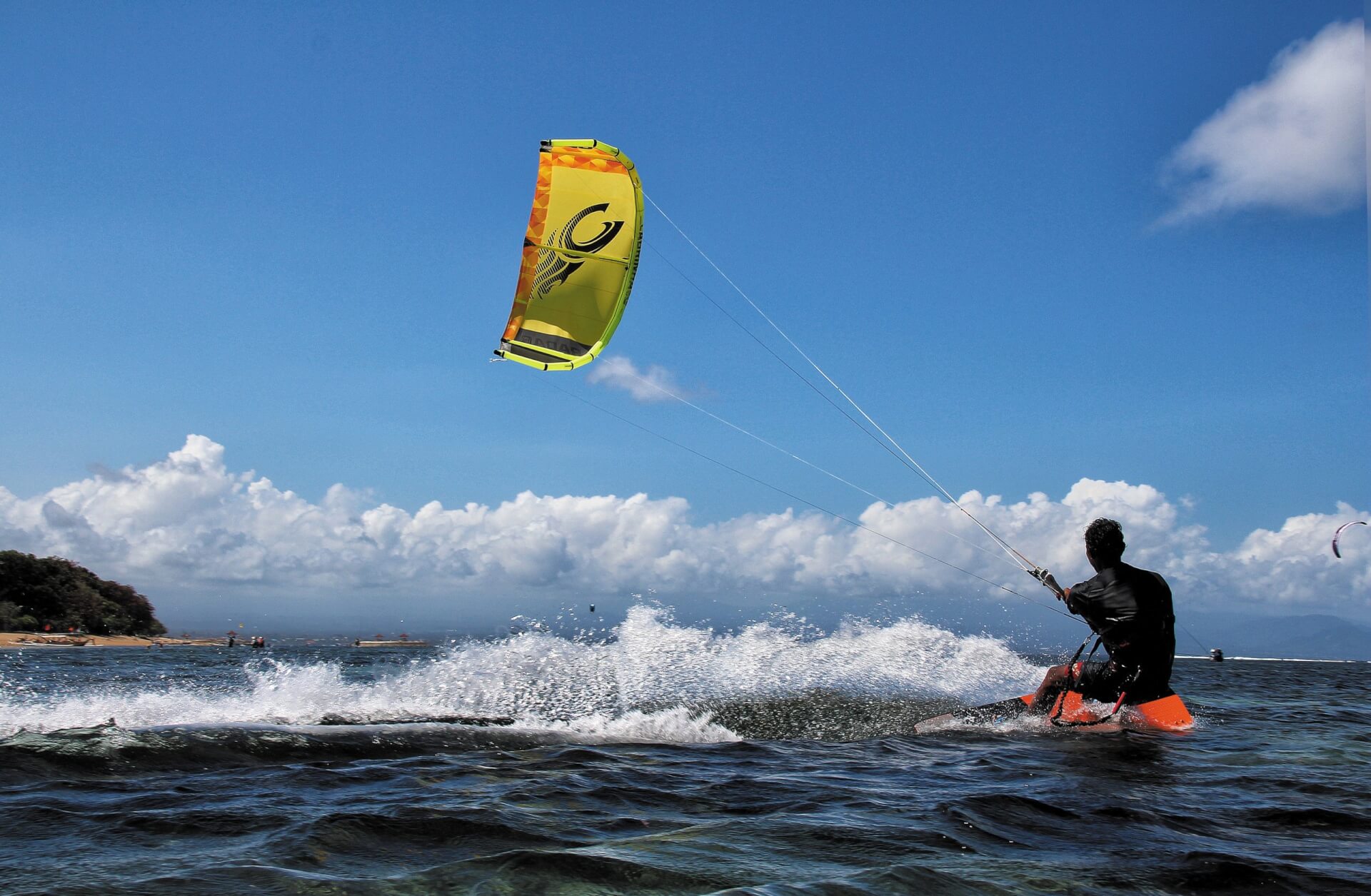
Kitesurfing equipment consists of a kite, control bar, harness, board, and safety gear. Typically, kites come in sizes ranging from 2m2 to 14m2, with larger kites providing more power to pull you across the water on days with less wind.
The control bar is the connection between you and the kite and allows you to steer the kite using different hand positions. Modern kites are designed to be easy to use and provide predictable performance even when conditions change.
Picture yourself on your board as you hold the control bar in your hands, feeling the power of the wind as your kite pulls you across calm waters at 20 knots or more. The thrill of speed combined with being out in nature is hard to beat.
Some people may worry that learning to use a kite will be difficult or dangerous. However, with proper instruction and equipment, kitesurfing is a safe and accessible sport for beginners.
Think back to when you first learned how to ride a bike; it may have seemed challenging at first but soon became second nature once you got the hang of it. Kitesurfing is similar in that with practice and patience, it’s possible to develop muscle memory and build confidence on the water.
In the next section, we’ll take a closer look at body positioning and control techniques critical to enjoying kitesurfing safely and effectively.
- Kitesurfing is a thrilling water sport that requires specialized equipment, including a kite, control bar, harness, board, and safety gear. Kites come in different sizes to account for variations in wind strength. The control bar is how the user steers the kite and modern kites are designed for ease of use and predictable performance. While some may worry about the difficulty or danger of kitesurfing, with proper instruction and equipment it can be safe and accessible for beginners. With practice and patience, riders can develop muscle memory and confidence on the water. In the next section, we will explore body positioning and control techniques necessary for safe and effective kitesurfing.
Body Positioning and Control

One of the most essential aspects of kitesurfing is body positioning and control. Proper body positioning can help you stabilize yourself while riding in the water or air, avoid injuries during landings, and allow you to perform tricks successfully.
To get started with body positioning, you need to learn how to properly ride downwind, which is the initial direction any beginner will take. This involves placing your weight on the back foot while keeping your front foot light on the board. Keeping your hands at hip level will assist you in balancing, prevent you from losing control over the kite while also maintaining good posture.
When approaching the windward side, transfer your weight from your back foot onto the front foot by leaning forward slightly. It’s also important to keep tension in the lines while transitioning between directions with simultaneous hand movements.
What is Kitesurfing: First experiences in controlling a kite rely heavily on finding a comfortable stance that feels natural but doesn’t negatively affect performance. While one may find respite crouching low, it results in reduced visibility, along with discomfort and long term back pains. One solution for beginners would be to incorporate an ergonomic harness and longer kite lines into their setup. This helps maintain balance and control over gusts or wind shifts without impeding vision or flexibility.
Another important aspect of stabilization while kitesurfing is edging; the process of dipping the edge of your board perpendicular to the ten o’clock position behind you to create drag against water flow resulting in smaller turns relative to change profile angles. If performed properly, edging prevents riders from losing balance while making tighter or broader corners around larger waves.
A perfect example of impeccable body control and positioning comes from an experienced German kitesurfer named Kevin Langere who spent weeks learning new techniques and performing stunts for his YouTube channel. In one video titled “Biggest Air” where he rode the coast of Portugal, Langere soared 25 meters into the air through his expert use of momentum, board orientation and line tension.
Research reveals that experiments on body positioning have positive effects on increasing skill level. For example, a study by the Occupational Therapy Program at Eastern Michigan University showed that when kitesurfers adopted a certain posture and trunk rotation, they were able to ride with more control over their speed depending upon wind gusts.
There is an ongoing debate in the kitesurfing community regarding optimal foot placement on the board, some argue that being in a centered position gives better stability while performing aerial maneuvers and avoiding injuries on different surfaces, whereas others highlight how having most of your weight concentrated on one side allows for more aggressive turns and quicker acceleration. Ultimately, it all depends on personal preference and style.
Now that you have understood the importance of body positioning and control, let’s move towards understanding fundamental techniques necessary for getting started with kitesurfing.
How to Get Started with Kitesurfing
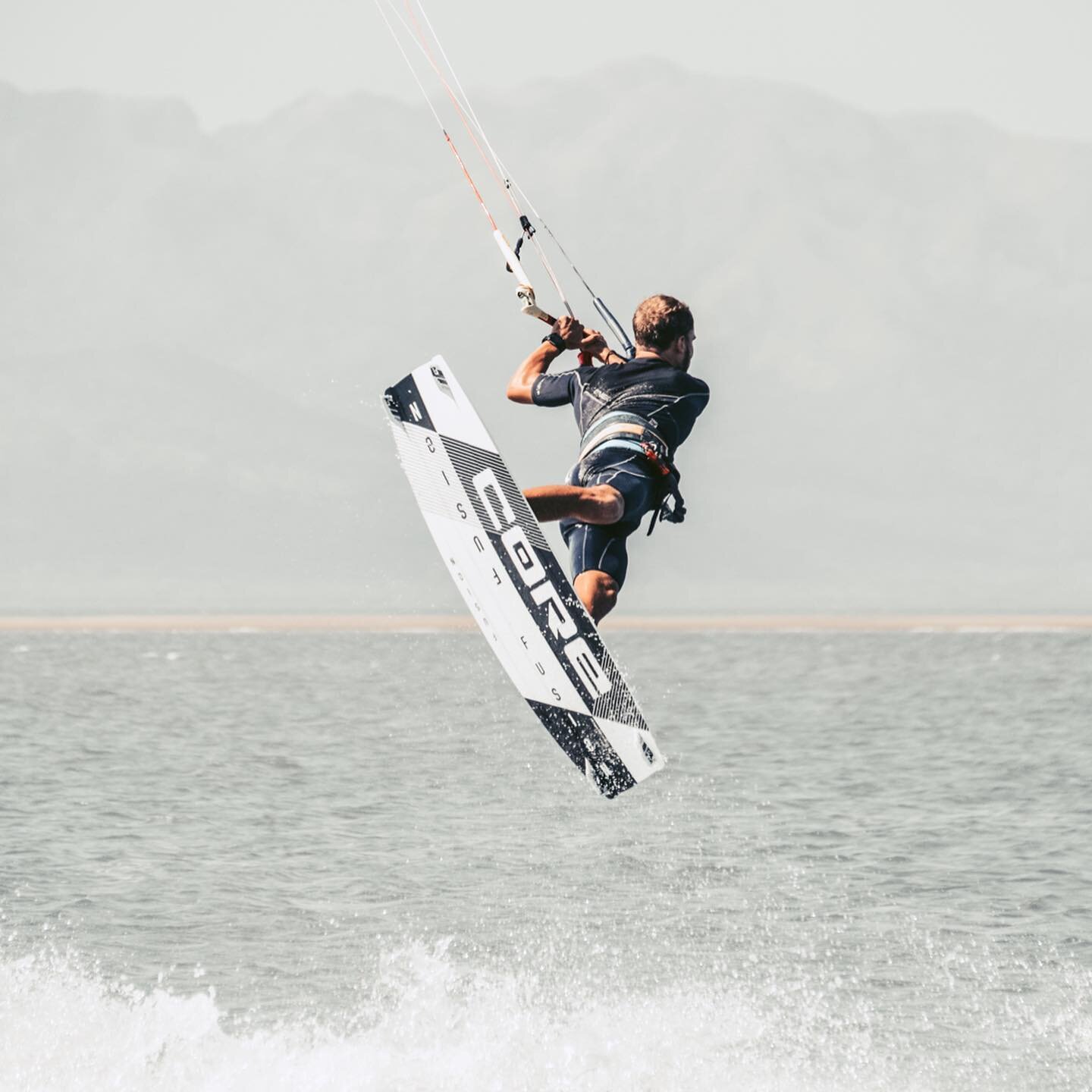
What is Kitesurfing: Before getting into technical details, it’s essential to stress the importance of taking lessons from qualified instructors – safety should always be the primary concern when doing any watersport.
To begin your kitesurfing journey, the first step is selecting appropriate equipment; these include a kiteboard customized according to rider dimensions and ability level, a quality harness connecting rider and kite with a line system designed for preventing tangles and safe release procedures, a properly functioning inflatable kite based on preferred riding conditions involving wind strength & direction e.g., flatter water locales where smaller size kites are required, or wave affected areas where sheets need a much larger surface area. Equipment expenses can quickly escalate so consider purchasing second-hand equipment from trustworthy sources or renting gear if available until ready to make investments.
Secondly, gaining knowledge regarding safety protocols such as weather forecasting (wind changes, tides), performing self-rescue technics in case of emergency – an essential skill when one experiences a sudden loss of control over kite or equipment failure – will help maintain on-land safety and provide quick recoveries from potential accidents.
One of the most important techniques when learning kitesurfing is launching and landing your kite. The process involves considering wind speeds in your particular location and visualizing the force applied by the kite before launching. Upon landing, it’s essential to ensure that both kite lines are appropriately stowed and safety systems have been engaged to prevent any accidental activation or detachment.
Once basic knowledge is established, the next step is understanding fundamental techniques such as body dragging, which refers to “drifting” on purpose while maintaining control over the kite. This technique helps build muscle memory and coordination needed to perform advanced moves comfortably. Another technique worth paying attention to is board handling, which involves getting accustomed to usual foot placement, edging, standing up while powering up before making turns for rhythmic carve transitions around the corner.
One of the most prominent kitesurfing athletes in history; Ruben Lenten suggests keeping oneself equipped with at least three different harnesses and experimenting with kite size as per riding preferences based on budget limitations.
Think about kitesurfing as a dance between human and nature where every action results in a reaction that ultimately leads towards achieving balance with consistency in applying different techniques. While there may be setbacks during initial stages of training, remember that practice makes perfect so keep pushing forward even if progress seems slow.
With fundamental techniques now understood, it’s time we move towards practical applications of kitesurfing.
- Kitesurfing, a wind-powered surface water sport, has gained significant popularity over the years with an estimated 1.5 million kitesurfers worldwide as of 2023.
- Technological advancement in the sport is evident as the industry sells around 100,000 to 150,000 kites annually.
- The risk factor involved in the sport has considerably decreased over the years due to improved safety measures. In its early days, there were notable injuries and some fatalities; however, advancements in equipment technology and instruction have significantly improved the safety record.
What is Kitesurfing: Fundamental Techniques
Before you get started with kitesurfing, you must first learn fundamental techniques that will allow you to control the kite and board. Two of the most important techniques to learn are body dragging and launching and landing the kite.
Body dragging helps riders learn how to steer the kite while in the water. The technique involves using the kite’s power to move through the water without a board, with a focus on developing control over the kite’s direction and speed. To body drag, maintain a relaxed posture, ensuring that your arms are extended straight out from your shoulders. This will give you better control over the kite’s movements as you use your lower body to navigate through the water.
Launching and landing the kite can be challenging for some, but it is critical for keeping both yourself and others safe. Grip the bar with both hands while standing downwind of where you want the kite to launch or land. Once you’re ready, signal to someone onshore or in the water exactly when you plan to launch or land. Holding onto one of the kite’s lines, gently pull as if starting a lawnmower, allowing enough slack for someone else to hold onto part of the bar.
To bring down a launched kite safely, hold onto both sides of the bar before bringing it down slowly by pulling in on either side of the bar. Ensure that your hands are close together at this point because releasing one end too early could result in disaster. Once again, communicate with anyone nearby so they know what is happening.
An experienced kitesurfer once told me that learning how to master body dragging was one of their most significant hurdles when getting into kitesurfing. While they initially struggled to keep their bodily movements controlled while at sea, they quickly gained confidence after practicing regularly and eventually mastered various types of body dragging within just a few weeks.
These two fundamental techniques are essential to enjoying kitesurfing to the fullest. Without learning proper control, you expose yourself and others to unnecessary risks while possessing less freedom of motion. The excellent news is that once you’ve nailed these techniques, you can now move on to other basics such as water-starting and steering the kite even when standing upright on the board!
Now that you have learned the fundamental techniques required for kitesurfing, we shall move ahead and examine some practical applications where you can showcase your newfound skills.
What is Kitesurfing: Practical Applications of Kitesurfing
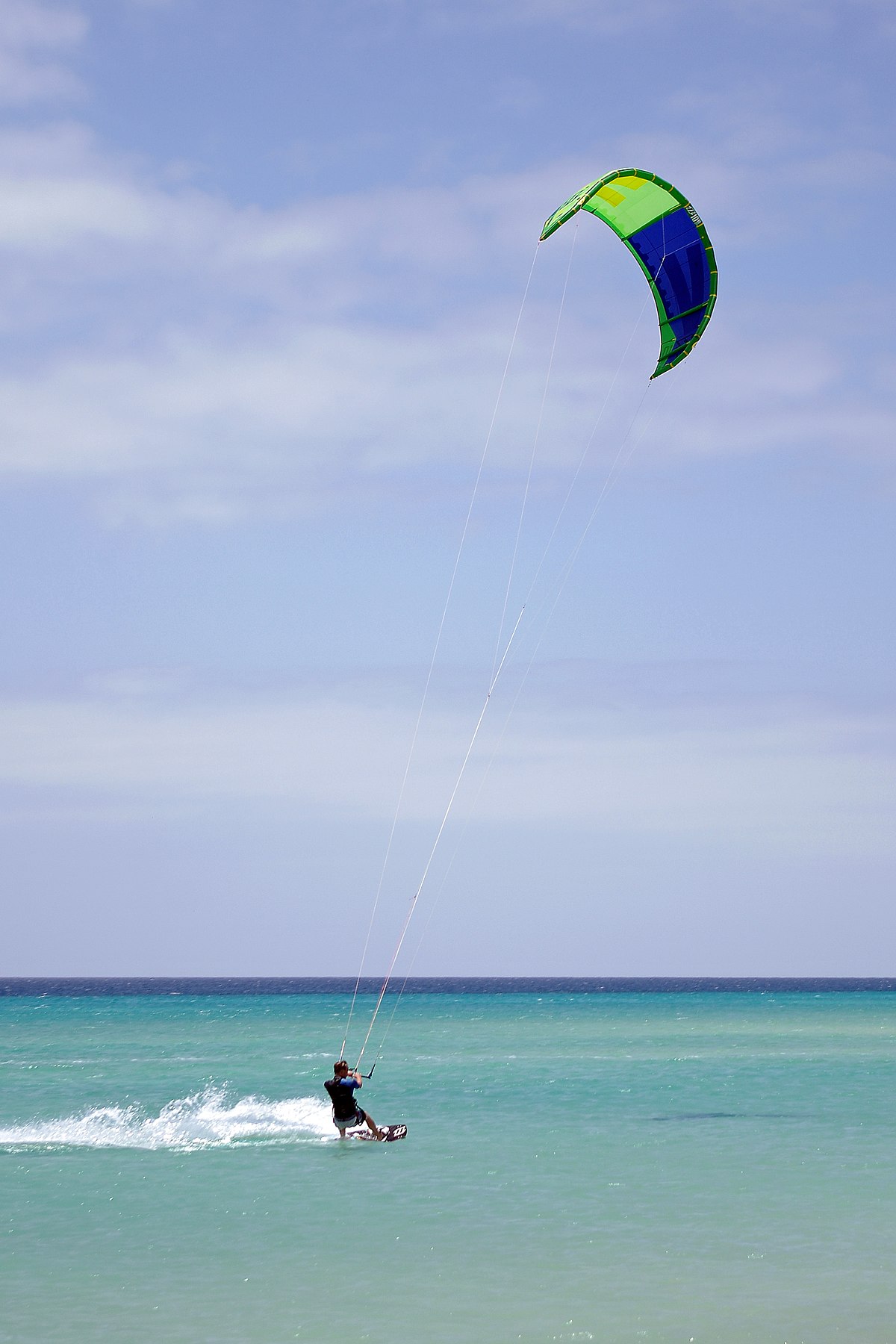
Kitesurfing is a thrilling sport with numerous practical applications, making it an alternative form of transportation, a recreational activity, or even a competitive pastime.
One common practical application of kitesurfing is navigation. Harnessing wind power, skilled kiters who are comfortable with their technique don’t necessarily need waves or choppy waters to ride – just a strong gust of wind will do! Downwinders and upwinders make up two basic categories of sailing. Downwinders involve navigating across from one point to another in the direction in which the wind is blowing. In contrast, upwinders are learned by people who want to improve their kite maneuvering skills by practicing how to sail against the wind.
Another great use case for kitesurfing has been in helping individuals launch and manage big ships using various types of kite propulsion systems. Not only does this reduce consumption expenses but it also helps conserve energy effectively.
Finally, one more exciting application that many people enjoy is doing stunts and tricks while performing aerial maneuvers from one wave peak to another – just like snowboarding or windsurfing on saltwater waves!
Of course, balancing risk with rewards is always important when engaging in thrilling sports such as kitesurfing. Acquiring too much speed can quickly lead to accidents if riders lack not only control but also the ability to stop when needed. Moreover, kitesurfing in a crowded area without caution can be hazardous because it increases the risk of accidents caused by distracted drivers, inexperienced kiters or changing wind conditions.
A regular kitersurfer may often seek flat and calm water along the coastline with no obstacles such as rocks or other boats to navigate – this makes for an excellent location to perform aerial maneuvers, practice tricks and enjoy the thrill of riding the wind.
Kitesurfing is like roller skating on water using a kite bar! The difference lies in how you tune your muscles and reflexes in line with your positioning and movement timing. It’s exciting, and each ride requires perfect communication skills among riders, kitesurfer boat operators, and water waves.
While these diverse applications of kitesurfing show its versatility and potential uses, safety remains the highest priority for any kitesurfer. In the next section, we’ll explore just how to ensure your hours on the water are fun yet safe.
What is Kitesurfing: Ensuring Safety in Kitesurfing
Kitesurfing is a thrilling and exhilarating sport, but it also requires proper safety measures to prevent accidents. It’s essential to keep in mind that kitesurfing is an extreme water sport that involves wind power, and while it can be safe if executed correctly, it can pose a considerable risk if proper precautions aren’t taken. In this section, we will discuss the necessary measures for ensuring safety while kitesurfing.
Before getting started, it’s crucial to always check the weather forecast before hitting the water. Determining the wind speed and direction is critical as you need sufficient wind to get going, but too much wind may result in loss of control, lack of stability or even dangerous situations like injury to individuals and damages on objects nearby water surface. While local weather reports are helpful, it’s better to use a reliable weather app or check the online meteorology guides for your region.
Secondly, having the right equipment is vital to ensure safety in kitesurfing. This includes a kite (appropriate size), board, harness and wetsuit. The kite should be appropriate based on your skill level and expected winds and water conditions of that day; checking with professional advice never hurts. The board should be chosen according to skill level and purpose – twin-tip boards are versatile for beginners wanting to practice sliding and jumping while directional boards suit more experienced riders looking for acrobatic waves maneuvers.
Proper body positioning will also help enhance your overall experience and minimize the risks involved. Maintaining correct body position when kitesurfing requires balance by distributing your weight over the board and keeping in mind small adjustments from knee bends instead of using rapid jerks due to strong gusts: think about balancing on top of a decorative ball without falling.
Lastly, learning the fundamental techniques of kitesurfing before hitting the water can significantly reduce the risk of injury. Defining a pre-flight checklist, monitoring gear and wear continuously, practicing with professional guidance is key to becoming proficient at kitesurfing while still keeping yourself safe during one’s kitesurfing career. Never hesitate to ask questions or attend beginner demonstrations in a local club.
Kitesurfing provides an incredible adrenaline boost, but it also has its risks that cannot be ignored. Luckily, taking appropriate safety measures and maintaining proper equipment will go a long way in preventing accidents or injuries. With consistent practice, patience, and proper guidance, anybody can master the arts of kitesurfing safely. We hoped you licked this guide about what is kitesurfing.